In many respects, Bitcoin was a trojan horse that enabled us to introduce mainstream society to the act of using a public/private key pair to sign transactions in a secure, immutable, and near-frictionless manner.
Now 12 years on after the advent of Bitcoin, it is becoming increasingly common for dApp users to sign a wide variety of so-called extrinsics (this is the terminology introduced within the Polkadot community), i.e. transactions, votes, decisions, social-facts, and other community-verifiable events, using the public/private key pair.
For readers who are new to crypto, your public key is used to receive Bitcoin from someone else who has sent it to your address, and your private key is used to unlock or send your Bitcoin from your address to someone else.
Sometimes this public/private keypair is referred to as a crypto wallet, sometimes it is called a crypto account. These terms (wallet, account) were useful in the early days of Bitcoin to communicate to newcomers the function and benefit of the new technology, however, the technology doesn’t actually work quite like a leather wallet or a bank account at all.
To actually understand the technology, you need to consider it from first principles. It is important to understand that there is no systems admin or trusted third party who can help you recover your private key if you lose it.
Here is a useful video to go over these basics:
The public/private key pair provides both an address and signing system that offers a combination of a privacy to the user, a system for securely expressing one’s freewill by signing transactions, votes, and other extrinsics using one’s private key, and a public identifier for quickly looking-up and verifying extrinsics locked to the blockchain by other members of the community.
We can say the private key is a tool for expressing one’s freewill, in the sense that the act of signing an extrinsic with a private key is a voluntary, intentional, and conscious choice. An important concept in the philosophy of free will is the concept of ‘the freedom to do otherwise’ (see: https://plato.stanford.edu/entries/freewill/). Since a person who enters the private key clearly has ‘freedom to do otherwise’ (i.e. not to enter the private key and not to sign the transaction), it logically follows that every time a person signs a transaction they’ve engaged in an expression of free will.
Moreover, since every time we express our free will within a blockchain community there is a record of this important event shared directly with community members on the public ledger, thereby, the private key is the tool by which we can record the expression of our free will in a community-verifiable manner, and we can be confident that our free will has not manipulated, altered, or thwarted. This feature becomings incredibly valuable in the face of attempts to steal an election, which, historically might have been done by destroying ballots.
In the early days of cryptocurrency use of the public/private keypair technology was a bit clumsy, as long strings of digits seemed difficult to use, and human brains were not facile with memorizing or transcribing long strings of digits.
This early difficulty has been overcome with the creation of the sixteen-word seed phrase as a basis of recording and saving the private key, which has become a dominant design today, and which makes it somewhat easier to record, save, and input a long private key without committing an error. But, even with a 16-word seed phrase, it is still cumbersome to enter the private key every time one wishes to access their blockchain wallet using a new software client or dApp, and this was a real barrier to progress in the 2010 to 2017 time period.
Perhaps one of the biggest advances over the past decade in the use public/private key pairs is the invention of the Chrome browser extension that allows a user to encrypt and hold their private key within the browser extension protected by a normal password, and then to leverage this extension to make their private key accessible to any dApp or software client when it is needed to sign a transaction simply by entering their password.
The first instantiation of this concept was created by the team at Metamask, and now Polkadot, Terra, and Cosmos networks all offer this capability (the latter via the Keplr wallet).
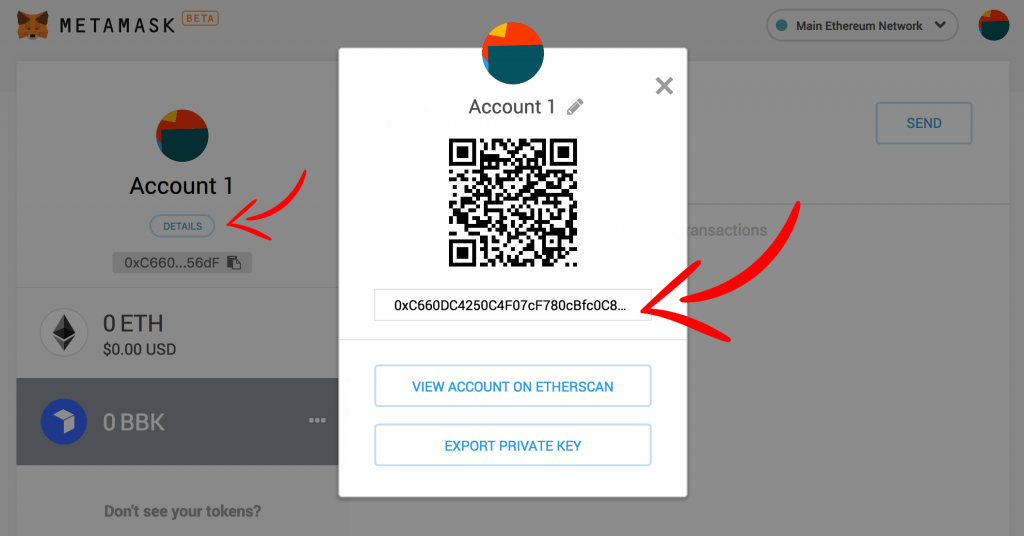
Using a Chrome browser extension, it is possible to connect any website to a blockchain wallet seamlessly and frictionlessly, and this makes it possible for any website developer to empower his or her users to initiate blockchain transactions, collect votes, log decisions, or participate in community events, all from their smart phone, and all recorded on-chain, without any friction or frustration in the experience.
Amazingly, as of 2021, any website on the Internet can now gain the functionality of a dApp, offering blockchain-anchored services integrated into the user interface and all webpages on the Internet can now be upgraded to Web 3.0 capabilities!
With vast numbers of new kinds of blockchain-anchored services deliverable via these Chrome browser extensions, we are going to start to see a convergence of Web 1.0/2.0 and Web 3.0 capabilities, a Cambrian explosion of dApps, and new blockchain-powered service offerings everywhere on the Internet, and within 10 years the Internet will look vastly different from how it looks today!
Since the future equilibrium for the distribution of blockchain technology throughout society is most likely a ‘network of networks’ model, the last step to eliminating user friction in the use of Web 3.0 services is to make it possible to hold multiple private keys for multiple blockhains within one browser extension, thereby making it possible for the Internet user to use services from many different blockchains seamlessly and without needing to deal with multiple private keys and without needing to have multiple browser extensions and to have to toggle between them constantly.
The company WalletConnect is making the fastest progress towards this inter-blockchain future, with a Chrome browser extension configured to work with more than 50+ different major blockchain wallets and networks at this point. I am a big fan of what Pedro Gomes and Mikko Ohtamaa are putting together with the WalletConnect service, and believe they have found a way forward for our community to offer browser-based dApp accessibility at scale in a multi-chain world.
Now that every web page on the Internet can be frictionlessly-connected to a blockchain account on dozens of blockchains, users of any website can now sign transactions, votes, and other community-verifiable events, this is going to start to blow-up with user adoption of dApps globally. This foundational technology is incredibly important and exciting! The Web 3.0 future is here!
The possibility of leveraging this Web 3.0 technology to build the Humanity 3.0 informal institutions, which we can use to run our humanity in a better way, are coming much faster than anybody realizes! I believe the technology needed to create this future world is already here, the only thing missing is recognition of what is possible and the hard-work of building high-quality informal institutions and new models of public service delivery on top of this technology to bring efficiency, justice, and prosperity to humanity.
 Humanity 3.0